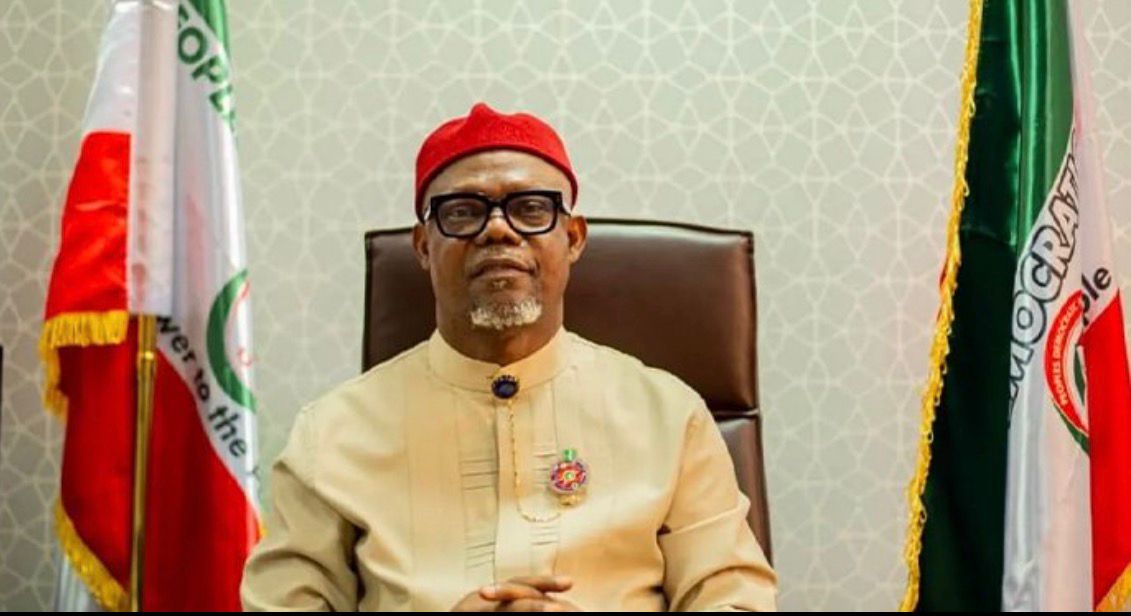
Rivers Senator, Works Committee Chairman Barinada Mpigi Passes On at 64
Sadness has gripped Nigeria’s political landscape following the death of Senator Barinada Mpigi, who represented the Rivers South-East Senatorial District until his passing.
Reports indicate that the lawmaker died on Thursday at the age of 64 after a brief illness, drawing tributes from colleagues, political associates, and constituents across Rivers State and beyond. His death was first made public through media reports and later acknowledged within the National Assembly, where fellow lawmakers described the loss as a significant blow to the Senate and the people he represented.
Born on June 23, 1961, Mpigi built a reputation as a grassroots politician with deep community roots, particularly in Tai Local Government Area of Rivers State. Before his election to the Senate, he served two terms in the House of Representatives, where he was actively involved in legislative advocacy on Niger Delta development, environmental concerns, and community empowerment. His transition to the Senate further elevated his influence in national policymaking.
As Chairman of the Senate Committee on Works, Mpigi occupied a strategic position in overseeing federal road construction and maintenance projects across the country. In that capacity, he participated in budget reviews, project monitoring, and engagements with relevant ministries and contractors to address infrastructure gaps, especially in underserved regions. Colleagues often described him as diligent, accessible, and committed to ensuring that government projects translated into tangible benefits for ordinary Nigerians.
Beyond legislative duties, Mpigi was known for maintaining close contact with his constituents through outreach programmes, community consultations, and empowerment initiatives. Many residents of Rivers South-East have recalled his responsiveness to local concerns and his efforts to attract developmental projects to the senatorial district.
Tributes have continued to pour in from political leaders and community stakeholders, who have highlighted his calm disposition, bridge-building approach to politics, and dedication to public service. His passing adds to recent losses within the National Assembly and leaves a vacancy that will eventually require constitutional processes to fill.
Colleagues at the Senate described his death as a painful loss, noting that he was deeply committed to national development and the welfare of his constituents in Rivers State.
Across communities in Rivers South-East, constituents expressed shock and sorrow, remembering him as a voice for the ordinary people, including traders, youths, and local leaders who relied on his representation at the National Assembly of Nigeria.
Many say his passing has created a vacuum that will be deeply felt, not only in Rivers State but across Nigeria, where he contributed to legislative work aimed at national progress.
His death marks the end of a public service journey that spanned years of dedication to democratic governance and grassroots representation.